Polymer Compositions Driving Grip Characteristics in Casino Chip Perimeters
Written by Viktor Griffin · Aug 12, 2026

Polymer Compositions Driving Grip Characteristics in Casino Chip Perimeters
Polymer formulations play a central role in determining how casino chips perform during extended use in private game rooms where repeated handling occurs throughout long sessions. Manufacturers select base resins such as polystyrene blends and acrylonitrile butadiene styrene compounds then introduce specific additives that modify surface friction and edge profiles. These adjustments produce consistent tactile feedback that players rely on when stacking sorting and passing chips across tables.
Base Resin Selection and Initial Properties
Research from materials laboratories indicates that polystyrene provides a rigid foundation while acrylonitrile butadiene styrene adds impact resistance necessary for chips that experience frequent drops and contact with other pieces. Formulators adjust molecular weight distributions to balance hardness with slight flexibility so edges resist cracking yet maintain shape over thousands of handling cycles. Data collected by industry testing facilities shows that chips molded from these resins retain dimensional stability across temperature ranges commonly found in climate-controlled game environments.
Additives That Modify Edge Texture
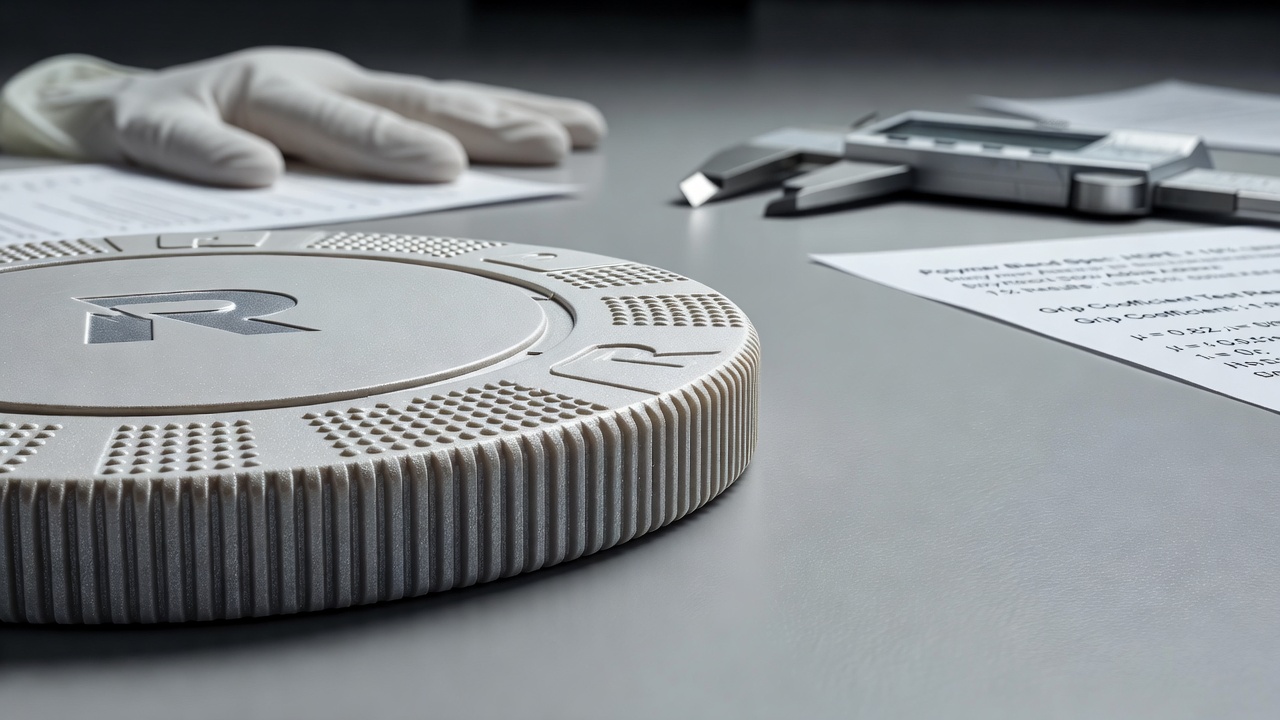
Calcium carbonate particles and micronized silica serve as primary texturizing agents that create micro-scale surface irregularities along chip edges. When dispersed at controlled concentrations these fillers increase surface roughness without compromising overall structural integrity. Studies published through the ASTM International standards organization document how particle size distribution directly influences coefficient of friction values measured on finished edges. Silicone-based processing aids further refine flow during injection molding allowing intricate edge patterns to form accurately before cooling.
Manufacturing Techniques That Lock in Grip Performance
Injection molding presses equipped with precision dies press molten polymer mixtures into forms that define both the chip body and its perimeter details. After initial forming secondary operations such as edge tumbling or controlled abrasion expose the embedded additives creating uniform gripping zones. Thermal annealing steps relieve internal stresses that might otherwise cause warping after repeated compression from player hands. Quality control protocols at production sites include friction testing on sample batches to verify that each production run meets specified grip thresholds before distribution.
Observers note that chips intended for private game rooms often receive higher concentrations of texturizing additives compared to those produced for high-volume casino floors because frequent manual interaction demands more reliable tactile response. Color pigments incorporated alongside the grip additives must remain inert so they do not migrate or alter surface chemistry over time. Accelerated aging tests conducted by polymer research centers demonstrate that properly formulated chips maintain edge texture integrity after exposure to skin oils perspiration and repeated cleaning cycles.
Performance Testing and Long-Term Durability Data
Independent laboratories measure grip consistency using standardized pull-force and slip-angle tests that simulate real-world handling sequences. Results compiled across multiple production lots reveal that formulations containing balanced silica and calcium carbonate blends deliver friction coefficients between 0.45 and 0.65 which corresponds to comfortable yet secure manipulation during extended play. European polymer research groups have documented similar performance metrics in peer-reviewed reports confirming that additive selection outweighs base resin type when determining long-term edge reliability.
Chips exposed to seasonal humidity variations retain their engineered textures because hydrophobic surface treatments applied during finishing stages limit moisture absorption that could otherwise soften edges. Maintenance routines in private settings typically involve mild detergent washes followed by air drying which preserves additive distribution without eroding micro-texture features. Industry reports from North American gaming suppliers indicate that properly formulated chips continue to meet grip specifications after five or more years of regular use in home environments.
Conclusion
Polymer formulations behind casino chip edges rely on carefully balanced combinations of base resins and functional additives to deliver consistent gripping textures suited to repeated handling. Manufacturing controls and post-production testing ensure these characteristics remain stable throughout the service life of the chips. As material science continues to advance new additive packages may further refine performance while maintaining compatibility with existing production equipment and quality standards.