Sourcing the Essentials: Material Chains in Custom Poker Chip Manufacturing for Private Events
Written by Viktor Griffin · Aug 16, 2026
Sourcing the Essentials: Material Chains in Custom Poker Chip Manufacturing for Private Events
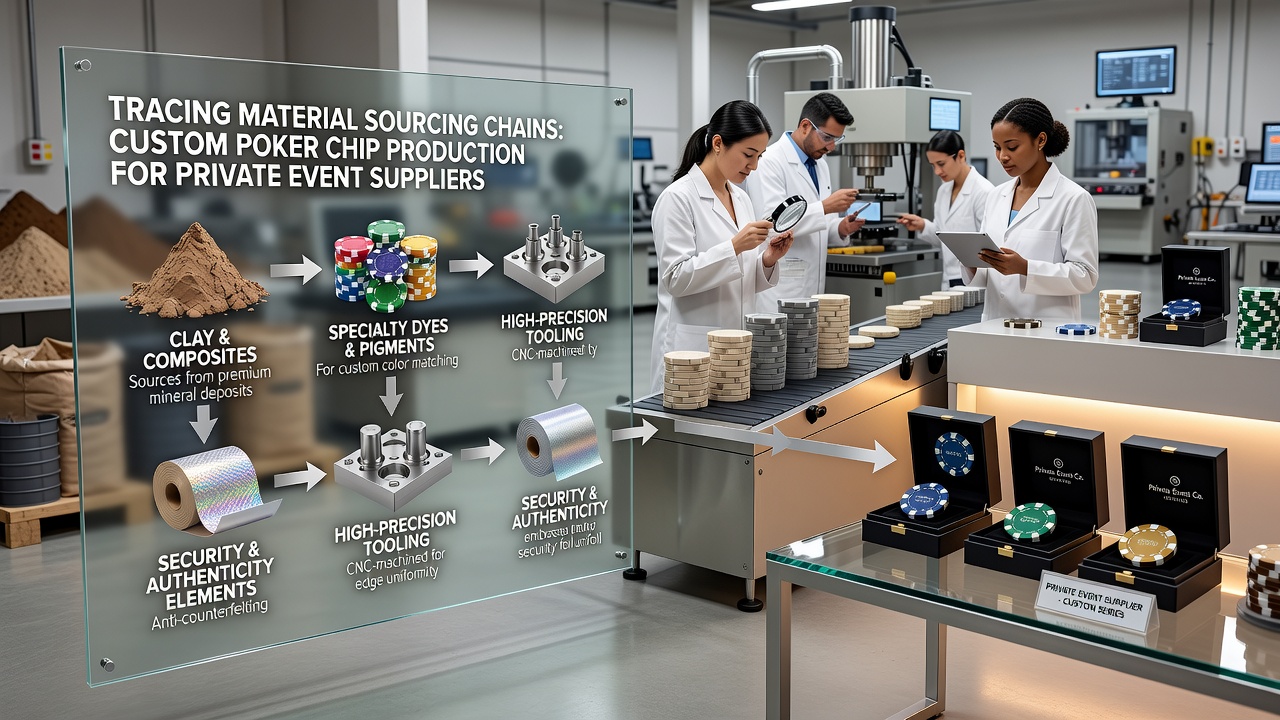
Private event suppliers rely on precise material sourcing chains when producing custom poker chips, and those chains stretch across multiple continents before the finished product reaches a single table. Clay composites often originate in deposits located in the southeastern United States while polymer resins arrive from petrochemical facilities in the Middle East and Asia. Metal inserts for weighting come primarily from mines in Australia and Chile according to data compiled by the International Council on Mining and Metals.
Primary Raw Material Origins
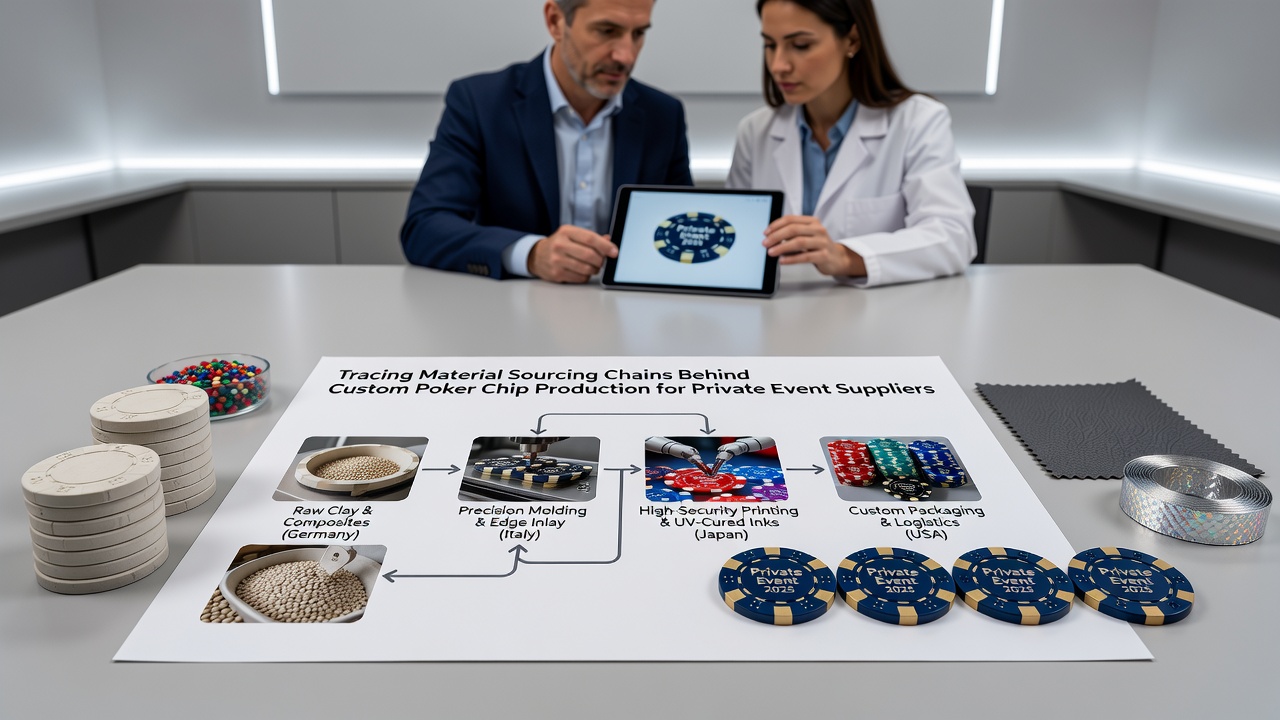
Clay extraction begins with open-pit operations that remove overburden and then process the mineral through washing and drying stages before it ships to compounders in Europe. Those compounders blend the clay with limestone and other fillers to create the dense material familiar in high-end chips. Meanwhile polymer pellets travel from production hubs in Saudi Arabia where natural gas feedstock supports large-scale resin output. Industry reports indicate that these pellets undergo further modification at specialized plants in Germany to meet the color and durability specifications demanded by event suppliers.
Metal slugs for chip cores follow a different route. Copper and zinc ores leave Australian and Chilean mines then travel to smelters in South Korea before arriving as finished discs at chip fabrication sites. Each stage includes documentation that allows downstream buyers to verify compliance with environmental standards set by regional authorities.
Processing and Compounding Steps
Once raw materials reach compounding facilities technicians combine clay with resins under controlled heat and pressure to form uniform slugs. Color pigments added at this stage come from chemical producers in India and Italy. The resulting mixture cools into large blocks that later get sliced into individual chip blanks. Quality checks at this point focus on density consistency and surface smoothness because variations can affect how chips stack and handle during use.
Customization and Traceability Requirements
Private event suppliers request unique edge spots, logos, and denominations that require additional laser etching or hot-stamping processes. These steps occur after the base chips leave the initial molding lines. Traceability systems now incorporate blockchain records that log each batch from mine or refinery through compounding and final assembly. Suppliers in August 2026 began integrating these digital ledgers more widely to satisfy client demands for verified origin data. The records also help manufacturers respond quickly if a material lot fails testing at any point along the line.
Packaging materials for shipment follow their own short supply chains. Cardboard boxes and protective foam arrive from regional converters located near the final assembly plants which reduces transit time and cost. Event suppliers often specify recyclable packaging to align with broader corporate sustainability targets.
Logistics and Distribution Networks
Finished custom poker chips move through consolidated freight networks that combine sea freight from Asian and European ports with last-mile trucking in North America and the Middle East. Temperature-controlled containers protect polymer-based chips from warping during long voyages. Customs documentation must detail material composition so that regulatory bodies in destination countries can confirm compliance with import rules on chemical content.
Those who manage these networks note that disruptions at any single node such as a port strike or resin shortage can delay entire orders for private events. Contingency planning therefore includes multiple approved suppliers for each key material so production schedules remain intact.
Conclusion
Material sourcing for custom poker chips used at private events depends on coordinated global networks that begin with mineral extraction and end with precise finishing and delivery. Documentation and verification processes continue to evolve as suppliers respond to client expectations around origin transparency and regulatory alignment. The result is a supply structure that supports both quality control and timely fulfillment for specialized orders.