Spinning Lessons: Casino Chips and Roulette Wheels Enhance Probability Education in After-School Programs
Written by Carlo Beck · Jul 26, 2026
Spinning Lessons: Casino Chips and Roulette Wheels Enhance Probability Education in After-School Programs
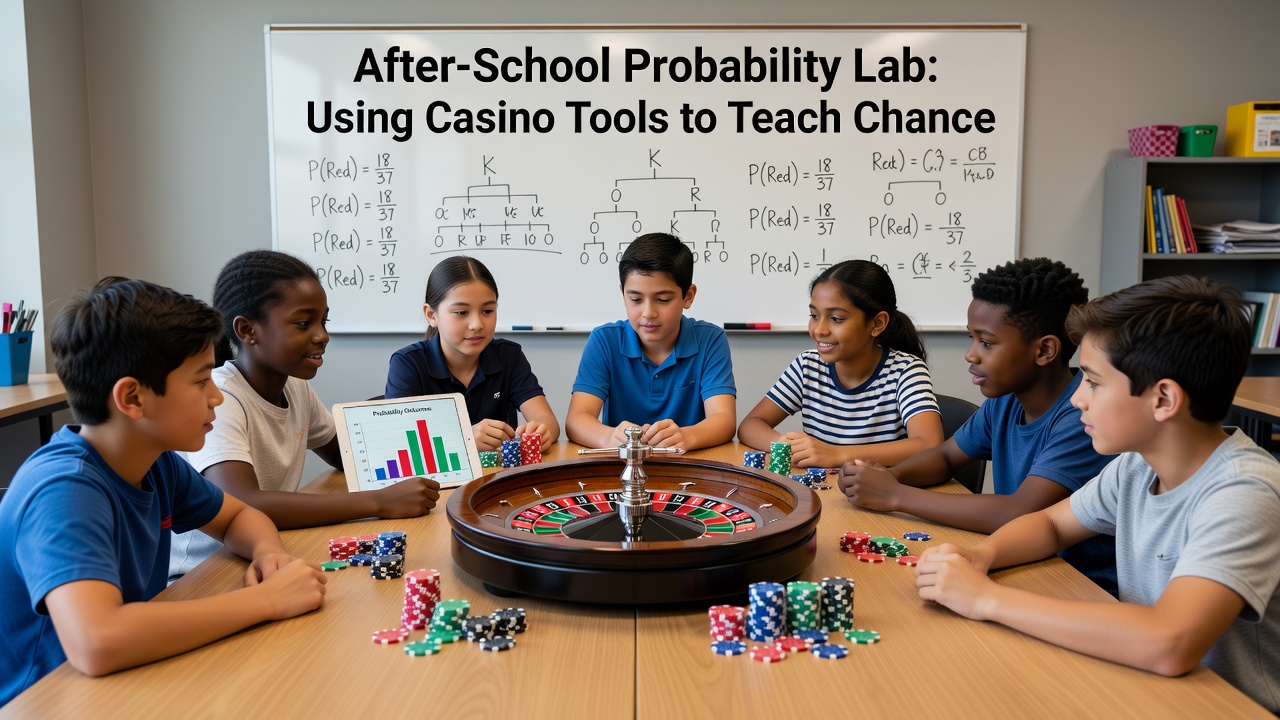
After-school programs across several regions have incorporated physical casino equipment such as roulette wheels and chips into structured probability modules, and this approach allows participants to conduct repeated trials while recording outcomes in real time. Data from various educational initiatives shows that students engage with concepts like independent events, expected value, and sample spaces through hands-on spinning and betting simulations rather than abstract worksheets alone. Programs in the United States and Canada report that these tools help illustrate the difference between theoretical probability and experimental results over multiple sessions.
Core Mechanics of Roulette for Probability Instruction
A standard European roulette wheel contains 37 numbered pockets while an American version uses 38, and instructors present these configurations to demonstrate how the addition of a zero or double zero alters the odds for each individual number from 1 in 37 to 1 in 38. Students place chips on the layout to represent bets, then spin the wheel and note frequencies, which builds direct experience with long-run behavior as hundreds of trials accumulate across a group. Observers note that the physical act of spinning creates immediate feedback loops, and participants calculate running percentages that they later compare against predicted values.
Chip-Based Betting Simulations and Outcome Tracking
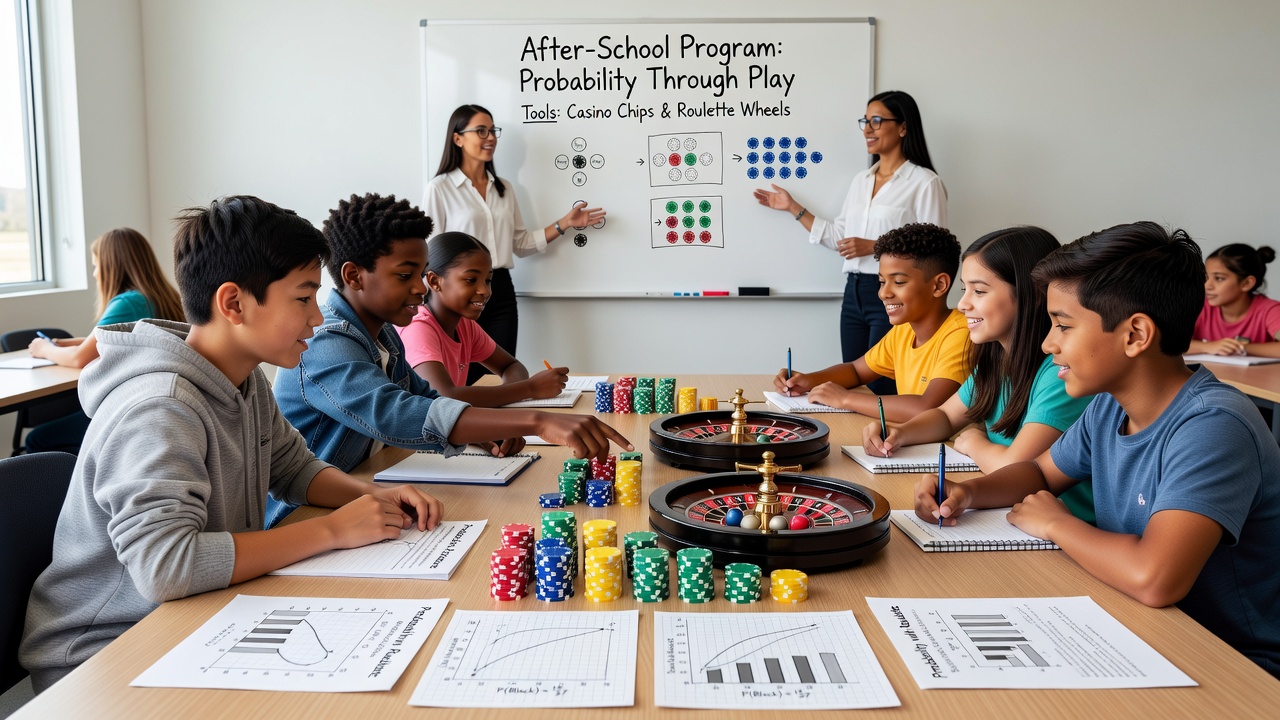
After-school facilitators distribute stacks of colored chips to represent different wager amounts, and groups assign values such as one chip equaling one unit to track gains and losses across multiple spins. This setup lets learners compute empirical probabilities for categories like red versus black or odd versus even, and they record data in shared spreadsheets that reveal convergence toward theoretical expectations. Research indicates that repeated chip exchanges reinforce the concept of fairness in games of chance, and participants often discover how house edges emerge when totals are aggregated over dozens of rounds.
Integration with Curriculum Standards and July 2026 Program Expansions
Educators align these activities with existing mathematics frameworks from organizations such as the National Council of Teachers of Mathematics, where probability standards emphasize conducting experiments and analyzing results. Several districts plan expanded modules that launch in July 2026, and coordinators expect increased enrollment as schools seek supplemental resources that combine physical manipulatives with digital data collection. Similar efforts in Australia draw on guidelines from the Australian Curriculum, Assessment and Reporting Authority, which highlights practical investigations of chance events.
Examples from Implemented Programs
One initiative in a Midwestern U.S. community center used a single roulette wheel and 200 chips to run weekly sessions for middle-school participants, and records show that average accuracy in predicting long-term frequencies improved by measurable margins after six weeks. Another group in Ontario adapted the same equipment for high-school enrichment, and facilitators documented how students identified patterns in streak lengths while using chips to model conditional probabilities. These cases illustrate how equipment originally designed for gaming translates into controlled educational experiments without introducing monetary elements.
Assessment Methods and Data Collection Practices
Program leaders employ pre- and post-activity quizzes that focus on calculating probabilities for combined events, and they supplement these with observation logs that capture how participants adjust strategies based on observed outcomes. Chips serve as tangible markers during group discussions, allowing learners to physically represent sample spaces on table layouts. Evidence from multiple sites indicates that such methods increase retention of key terms like mutually exclusive events and independent trials, and instructors share aggregated results at regional education conferences.
Conclusion
After-school programs continue to adapt casino chips and roulette wheels as accessible tools for probability education, and ongoing implementations through 2026 demonstrate measurable alignment with established mathematics standards. The approach supplies concrete experiences that complement theoretical instruction, and participating organizations maintain records that support further refinement of these methods across diverse regions.